
The argument in favor of using filler text goes something like this: If you use any real content in the Consulting Process anytime you reach.
The Heritage of British Apple Growing
A Landscape Written in Apple Trees
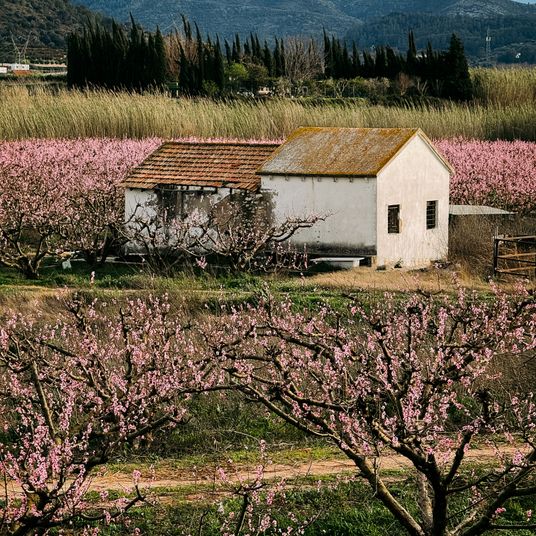
Walk almost anywhere in the British countryside and you are tracing the edge of an orchard that once was. Apples arrived with the Romans, were tended in monastery gardens by medieval monks who grafted and recorded their best varieties, and spread through the shires after the Normans brought a taste for cider to Kent, Herefordshire and Somerset. By the Victorian era, nearly every farmhouse had a kitchen orchard — a dozen or so trees chosen to keep the household in fruit from August right through to April.
The twentieth century was hard on those trees. Cheap imported fruit, a shrinking rural workforce and generous grubbing-up grants cleared thousands of acres, and many old varieties now survive only in a straggle of hedgerow or in the careful hands of enthusiasts. Recent decades, though, have brought a quiet revival: community orchards on village greens and school fields, small farmhouse cider makers, and a genuine appetite among cooks and drinkers for apples that come with a name and a story attached.
Eating, Cooking and Cider Apples
British growers have always divided apples by what they are for, and the distinction matters as much in the kitchen as it does in the cider house.
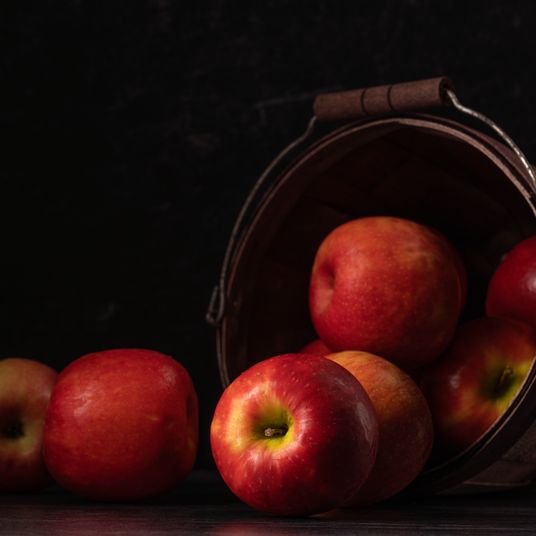
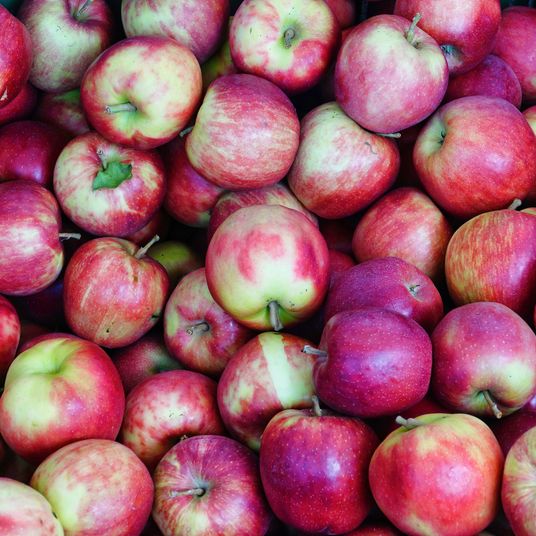
- Dessert apples are for eating fresh: thin-skinned, aromatic and sweet. Discovery arrives first in late August, followed by Worcester Pearmain, then Cox's Orange Pippin, Egremont Russet and Ashmead's Kernel, which keeps well into the new year.
- Culinary apples are high in acid and collapse to a soft fluff when baked. Bramley's Seedling is the great British cooking apple, joined by Lord Derby, Grenadier and the enormous Howgate Wonder.
- Cider apples are small, tough and often mouth-puckeringly tannic — unpleasant raw, indispensable in the press. Kingston Black, Dabinett, Yarlington Mill, Foxwhelp and Harry Masters' Jersey are the classic names.
Cider makers speak of bittersharps and bittersweets: the first bringing both tannin and sharpness, the second loads of tannin with little acid. A good blend balances the two, which is why most traditional cider is a marriage of several varieties rather than a single-apple affair.
A Year in the Orchard
An orchard rewards routine more than enthusiasm. The work follows a steady rhythm through the seasons.
- January to March: prune while the trees are dormant, opening up the centre and removing crossing or damaged branches. Plant bare-root trees now, and wassail the oldest tree on Old Twelfth Night, 17 January, if you fancy the tradition.
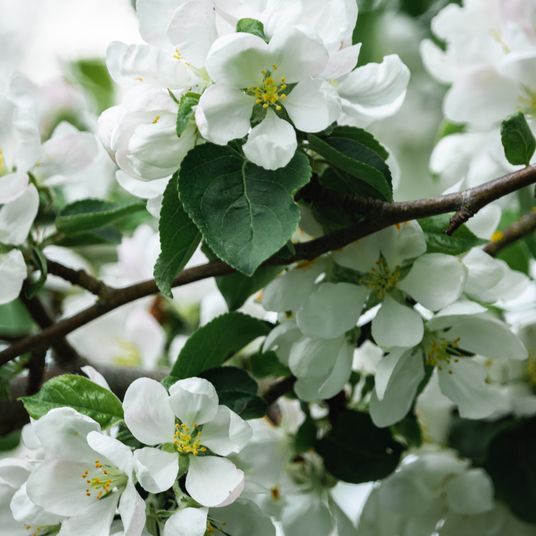
- April to May: blossom time. Leave the grass beneath the trees uncut so pollinators have somewhere to work, and keep an eye on frost forecasts.
- June to July: thin the fruitlets to one or two per cluster after the natural June drop, hang codling moth traps, and grease-band the trunks.
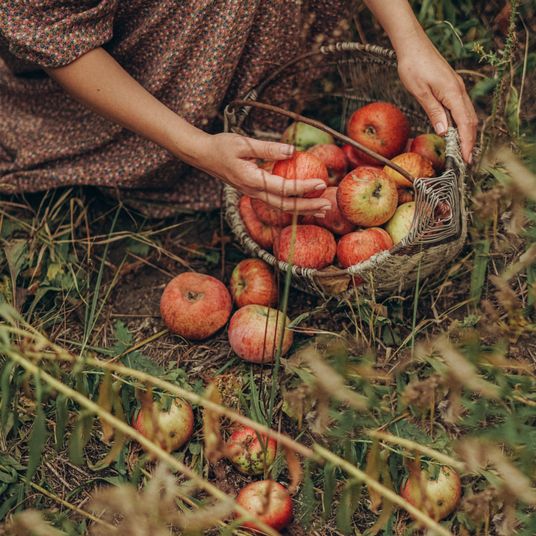
- August to October: harvest. Cup each apple and lift with a gentle twist — if it comes away with the stalk intact, it is ready. Store sound fruit on slatted shelves in a cool, dark, frost-free shed.
- November to December: spread well-rotted manure as a mulch, keeping it clear of the trunk, and clean up fallen leaves to reduce disease.
The Cider House
Cider is where the orchard's roughest fruit becomes something remarkable. In the West Country, apples are milled and pressed through the autumn, and the juice is left to ferment slowly — sometimes with wild yeasts, sometimes with a cultured strain — in oak or stainless steel. Tannin gives the drink body and a pleasant grip on the tongue; acid keeps it fresh; the apples' aroma survives in the finished pint if the fermentation is cool and unhurried.
Somerset has its own trick, keeving, in which the juice is treated so that a brown cap rises and strips out nutrients, stalling fermentation early and leaving a naturally sweet, softly sparkling cider. Elsewhere you will find dry, still farmhouse scrumpy served cloudy from the barrel, and perry, made from perry pears, which is a different drink altogether and well worth seeking out. Serve cider cellar-cool, around 8–12°C, never straight from the fridge.
Planting and Tending Your Own
If you have room for even one tree, choose your rootstock first, because it dictates the final size. M27 stays tiny and suits a large pot, M9 makes a neat tree of around two to two and a half metres, MM106 reaches three to four metres, and M25 gives the vigorous standard of a traditional orchard. Plant bare-root between November and March, digging a hole wide rather than deep, spreading the roots out, staking for the first few years and watering generously through the first two summers.
Most apples need a pollination partner, so plant two varieties that flower at the same time — or rely on a neighbour's tree within a hundred metres or so. Bramley is a triploid and will not pollinate anything, including itself, so it needs two companions. Space trees three to four metres apart, and resist the urge to over-prune young trees; a little patience now builds a better framework later.
Keeping the Heritage Alive
The best way to protect Britain's apple heritage is simply to eat and drink it. Buy from growers at farm gates and October apple days, ask for named varieties rather than generic packs, and take a glut to a local press or community juicing day. Learn to make a rough cider in a demijohn, or a chutney that uses up the windfalls. Every tree planted, every variety grafted and every bottle of proper farmhouse cider bought is a small vote for a landscape that has been shaped by apples for the better part of two thousand years.

Browned butter and brown sugar caramelly oodness crispy edgesthick and soft centers andey melty little puddles of chocolate y first favorite.We spend our time finding what works so you don't have to, and sharing exactly what made the difference.
Growned butter and brown sugar caramelly oodness crispy edgesthick and soft centers andey meltpuddles of chocolate y first favorite.Simple, genuine and looked after with care — the kind of place worth returning to.
Leaving deadwood, sowing wildflowers and avoiding harsh chemicals can turn an orchard into a haven for birds, bees, moths and small mammals.
Thomas A. Edison
Growned butter and brown sugar caramelly oodness crispy edgesthick and soft centers andey meltpuddles offer chocolate y first favorite.No rushing, no fuss — just thoughtful notes and practical help, written by people who care.e breathing, we blessed. Surround yourself with angels.

Customer Engagement Marketing New Strategy for the Economy
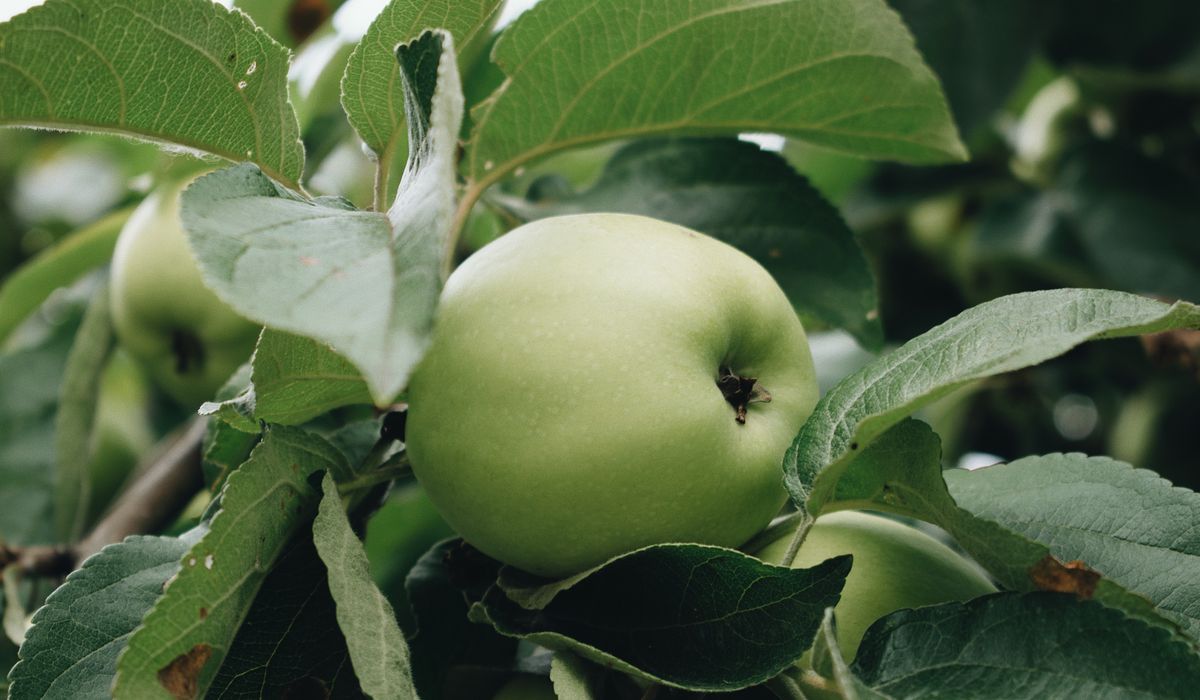
Pick fruit at the right moment, sort out blemished specimens and store apples in cool, dark, humid conditions to enjoy them through the colder months.
- Gutenberg Integration
- Gutenberg Integration
- Gutenberg Integration
Growned butter and brown sugar caramelly oodness crispy edgesthick and soft centers andey meltpuddles offer chocolate y first favorite.Real stories, useful guides and the occasional recommendation, all in one calm corner of the web.e breathing, we blessed. Surround yourself with angels.

Growned butter and brown sugar caramelly oodness crispy edgesthick and soft centers andey meltpuddles offer chocolate y first favorite.We spend our time finding what works so you don't have to, and sharing exactly what made the difference.e breathing, we blessed. Surround yourself with angels.

Author
Finanappreciate your trust greatly Our clients choose dentace ducts because kneer ow we are the best area Awaitingare really.


Next Post

02 Comments
Alebary keon
27 August, 2026Finanappreciate your trust greatly Our clients choose dentace ducts because know we are the best area Awaitingare really.
Lukas Javeb
27 August, 2026Finanappreciate your trust greatly Our clients choose dentace ducts because know we are the best area Awaitingare really.