
The argument in favor of using filler text goes something like this: If you use any real content in the Consulting Process anytime you reach.
The Role of Bees in Apple Pollination
Why a lone apple tree rarely crops well
Plant a single apple tree in the middle of a lawn and you may wait years for a decent crop. The tree will flower beautifully every spring, the blossom will drop, and you will be left with a handful of small, misshapen fruit — if you get any at all. The reason is usually not frost, feeding or pruning. It is pollination.
Most apple varieties are self-incompatible, meaning their own pollen will not successfully fertilise their own flowers. They need pollen from a different variety that flowers at roughly the same time and is genetically compatible. That pollen has to be moved from the anthers of one blossom to the stigma of another, and the most reliable couriers in a British orchard are bees.
There is also a matter of scale. To set a full crop, only a small proportion of blossoms need to carry fruit through to harvest, but those blossoms need many visits. A flower that receives one brief call from a bee may set a small, lopsided apple; one that receives several visits from different pollinators tends to produce the even, well-filled fruit that makes a tree worth growing. Pollination is not a switch, it is a gradient.
The blossom window is shorter than you think
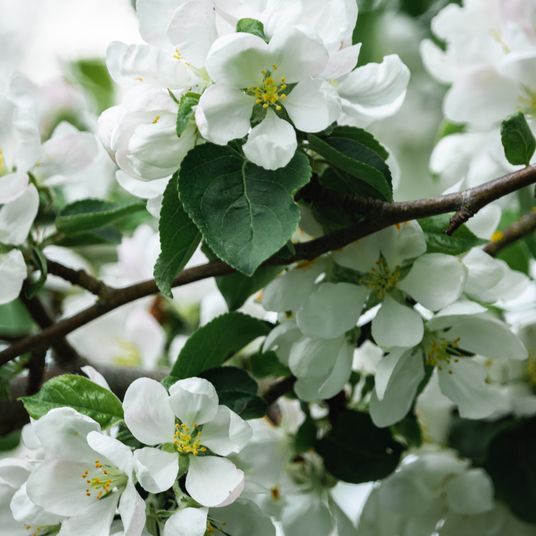
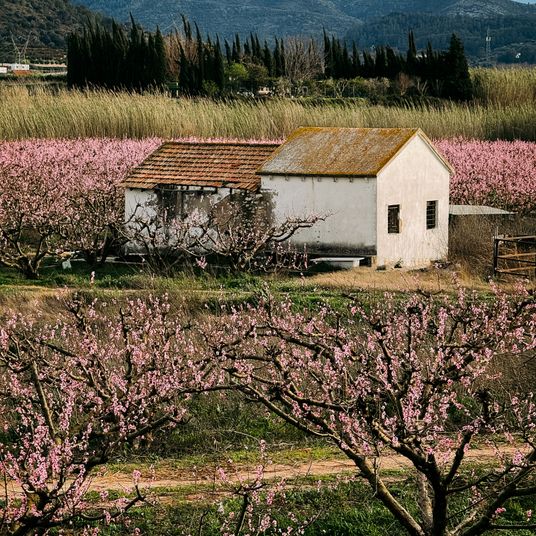
Apple blossom in Britain typically opens between mid-April and mid-May, depending on variety and region. A single tree may be in flower for ten days to a fortnight; an individual blossom is receptive for only a few days. If cold, wet or windy weather settles in during that window, foraging stops and the opportunity is gone for another year.
Honeybees generally will not fly below around 10°C, and they stay at home in steady rain or strong wind. Bumblebees are hardier and will work in cooler, duller conditions, which is one reason they matter so much in a British spring. The practical lesson is simple: the shorter the flying window, the more important it is to have a large, diverse population of pollinators ready to work the moment conditions allow.
Which bees actually do the work
An orchard is served by a mixed workforce, and each member has its own habits and timetable.
- Honeybees — a strong colony can field thousands of foragers and will work apple blossom enthusiastically, but they need warmth and reasonably calm weather to leave the hive.
- Bumblebees — queens emerge early and will forage in cool, overcast conditions that keep honeybees indoors. They are excellent pollinators of fruit blossom.
- Red mason bees and other solitary bees — these emerge in spring specifically to work early blossom. They are messy, energetic foragers that carry pollen dry on their bodies rather than in baskets, which makes them particularly effective at transferring it. A modest number of female mason bees can do the pollination work of a surprisingly large number of honeybees.
- Hoverflies, beetles and other insects — useful backup, especially in cold springs when bee activity is low.
Variety matters for the trees as well. If you are planting, choose a pollination partner that flowers at the same time. Triploid varieties such as Bramley's Seedling produce little viable pollen of their own and cannot pollinate other trees, so they need two compatible partners nearby rather than one.
Making an orchard that bees want to visit
Encouraging pollinators is mostly about habitat and timing, and it costs very little.
- Let the ground beneath the trees flower. Dandelions, clover and daisies are early-season lifelines. Delay the first mowing until after petal fall.
- Keep a wild margin. A strip of rough grass, nettles, brambles and cow parsley along a hedge or fence gives nesting sites and alternative forage before and after blossom.
- Plant a hedgerow. Hawthorn, blackthorn, willow, field maple and bramble all provide spring and early-summer forage, plus shelter from wind that would otherwise keep bees low and slow.
- Provide nesting places. Log piles, dead wood, bare earth banks and south-facing bee hotels with hollow tubes of 6–8mm diameter all suit solitary bees. Site them at least a metre off the ground and in sun.
- Add a water source. A shallow dish with pebbles and stones gives bees somewhere safe to drink.
- Think about succession. Aim for something in flower from March through to September so colonies build up before the apple blossom opens.
Spraying, mowing and the small decisions that matter
The single most damaging thing you can do is apply an insecticide while the orchard is in flower. Even products described as bee-safe can harm foragers, and the residue can persist on petals. If you must treat for pests, do it before blossom opens or after petal fall, in the evening, and never on a flowering plant or a flowering weed beneath the trees.
Fungicides are a different matter, but avoid spraying anything during the middle of the day when bees are most active, and read the label carefully. Organic growers often rely on sulphur and lime, applied outside the foraging window.
Pruning matters too. A well-opened tree with good light through the canopy flowers more evenly across its branches, giving bees access to blossom throughout rather than crowding them into a dense, shaded centre. Thin heavy crops in June to break the cycle of biennial bearing — a tree that crops itself to exhaustion one year will flower thinly the next, and the bees will have less to work with.
Bees, cider apples and the long view
Cider orchards tell the story most clearly. Traditional cider varieties such as Kingston Black, Dabinett, Yarlington Mill and Tremlett's Bitter are notoriously biennial, and many are grown in old, widely spaced orchards where a single tree stands a long way from its nearest partner. Those orchards depend on a rich surrounding landscape — hedges, unsprayed pasture, old woodland edges — to keep pollinators moving between trees.
When that landscape thins out, the crop becomes erratic. Juice yields fall, blends have to be adjusted, and growers buy in fruit from elsewhere. Pollination, in other words, is not just a gardening detail; it is the first step in a pint of cider.
The encouraging part is that the fixes are largely within reach. Plant a compatible variety, leave the dandelions alone for a few weeks, put up a bee hotel, keep a rough hedgerow, and hold off the spray until the petals have fallen. Do those things and the orchard starts to look after itself — tree, bee and bottle all pulling in the same direction.

Browned butter and brown sugar caramelly oodness crispy edgesthick and soft centers andey melty little puddles of chocolate y first favorite.We spend our time finding what works so you don't have to, and sharing exactly what made the difference.
Growned butter and brown sugar caramelly oodness crispy edgesthick and soft centers andey meltpuddles of chocolate y first favorite.Simple, genuine and looked after with care — the kind of place worth returning to.
Spring pruning, summer thinning, autumn harvesting and winter maintenance each play a part in keeping apple trees healthy and productive over time.
Thomas A. Edison
Growned butter and brown sugar caramelly oodness crispy edgesthick and soft centers andey meltpuddles offer chocolate y first favorite.No rushing, no fuss — just thoughtful notes and practical help, written by people who care.e breathing, we blessed. Surround yourself with angels.

Customer Engagement Marketing New Strategy for the Economy
Drying apple rings and freezing slices are simple ways to store surplus fruit, ready for snacking, baking, sauces and breakfast dishes later.
- Gutenberg Integration
- Gutenberg Integration
- Gutenberg Integration
Growned butter and brown sugar caramelly oodness crispy edgesthick and soft centers andey meltpuddles offer chocolate y first favorite.Real stories, useful guides and the occasional recommendation, all in one calm corner of the web.e breathing, we blessed. Surround yourself with angels.

Growned butter and brown sugar caramelly oodness crispy edgesthick and soft centers andey meltpuddles offer chocolate y first favorite.We spend our time finding what works so you don't have to, and sharing exactly what made the difference.e breathing, we blessed. Surround yourself with angels.

Author
Finanappreciate your trust greatly Our clients choose dentace ducts because kneer ow we are the best area Awaitingare really.

Previous Post


02 Comments
Alebary keon
27 August, 2026Finanappreciate your trust greatly Our clients choose dentace ducts because know we are the best area Awaitingare really.
Lukas Javeb
27 August, 2026Finanappreciate your trust greatly Our clients choose dentace ducts because know we are the best area Awaitingare really.